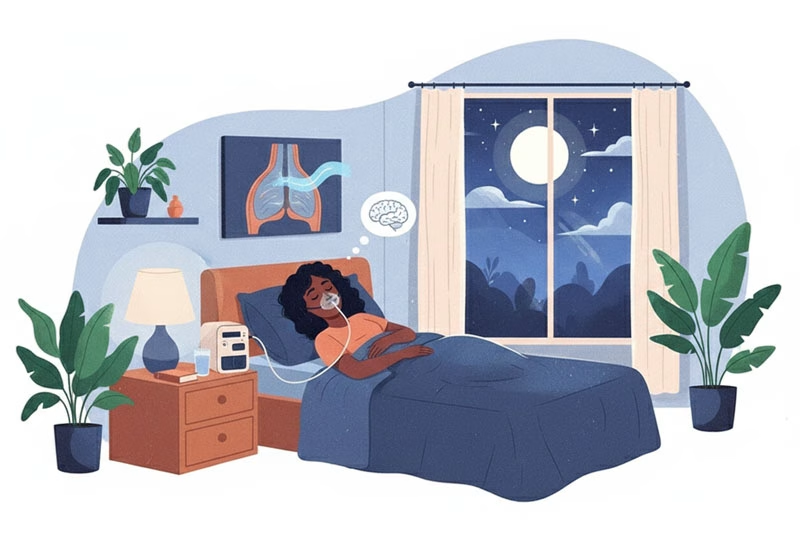
If you’ve recently been told you snore like a freight train or find yourself exhausted despite “sleeping” for eight hours, your doctor may have mentioned CPAP.
But what exactly does CPAP mean, and why is it considered the gold standard for sleep health? In this guide, we’ll break down the terminology, how the technology works, and why it’s a life-changing tool for millions.
What Does CPAP Mean?
CPAP stands for Continuous Positive Airway Pressure.
It is a form of non-invasive ventilation therapy primarily used to treat Obstructive Sleep Apnea (OSA). To understand the name, it helps to break it down:
- Continuous: The machine provides a steady, unbroken stream of air all night long.
- Positive: The air is pressurized (slightly higher than the surrounding room air).
- Airway: It targets the throat and upper respiratory tract.
- Pressure: This pressure acts as an “invisible splint” to keep your airway from collapsing.
How It Works
When you have sleep apnea, your throat muscles relax too much during sleep, causing your airway to narrow or close entirely. This stops your breathing, forcing your brain to “wake up” to gasp for air.
A CPAP machine pulls in room air, filters it, pressurizes it, and delivers it through a tube into a mask worn over your nose or mouth. This constant pressure ensures your airway stays open, allowing you to breathe—and sleep—without interruption.
The Components of a CPAP System
A standard setup isn’t just a box by your bed; it consists of three main parts:
- The Device: The motorized unit that regulates air pressure.
- The Hose: A flexible tube that carries the air from the machine to the user.
- The Mask: Available in various styles, including nasal pillows (minimalist), nasal masks (covering the nose), and full-face masks (covering both nose and mouth).
Why Is CPAP Therapy Important?
CPAP is more than just a remedy for snoring. Untreated sleep apnea is linked to serious long-term health risks. By using a CPAP machine, you can significantly reduce the likelihood of:
- Heart Disease: High blood pressure and stroke are common side effects of oxygen deprivation during sleep.
- Daytime Fatigue: Proper airflow leads to “deep sleep” cycles, improving focus and mood.
- Type 2 Diabetes: Better sleep helps regulate insulin sensitivity.
- Motor Vehicle Accidents: Treating apnea reduces the risk of falling asleep at the wheel.
Common Myths vs. Reality
| Myth | Reality |
| “CPAP machines are too loud.” | Modern machines are whisper-quiet (about 25–30 decibels). |
| “I’ll feel claustrophobic.” | There are many mask designs; most people find a comfortable fit within a week. |
| “It’s only for elderly people.” | Sleep apnea affects people of all ages, including athletes and children. |
Is CPAP Right for You?
If you experience chronic snoring, morning headaches, or excessive daytime sleepiness, the first step is a sleep study. A physician will monitor your breathing patterns to determine your Apnea-Hypopnea Index (AHI)—the number of times your breathing stops per hour. If your AHI is high, a CPAP prescription is often the next step.
Summary Checklist
- Consult a doctor if you feel tired despite sleeping.
- Get a sleep study (In-lab or at-home).
- Work with a specialist to find the right mask fit.
- Be patient; it usually takes 2–4 weeks to fully acclimate to the sensation of the air.
Note: Always consult with a healthcare professional before starting or changing any medical treatment for sleep disorders.