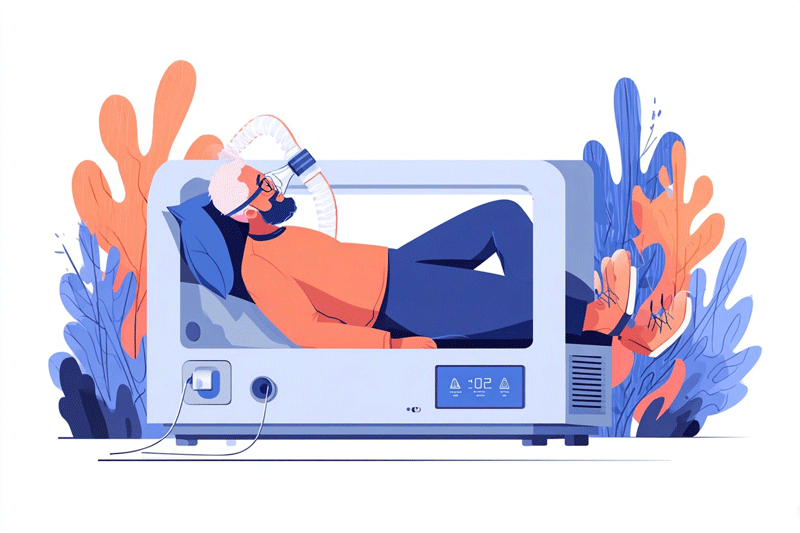
Quick answer: is it bad to use CPAP all the time?
No. CPAP is meant to be used every time you sleep, naps included — it only works while you are wearing it, and obstructive sleep apnea is a chronic condition (source: NIH – StatPearls). There is no evidence that consistent use weakens your breathing or creates dependency. Under-use is the real risk: nearly half of patients stop using CPAP consistently after the first month (source: NIH – StatPearls).
Key takeaways
- Every sleep, not every hour. CPAP is prescribed for sleep. Wearing it while awake is not standard and should only be done if your clinician asks for it.
- Naps count. Airway collapse does not care what time it is, so the same therapy applies to daytime sleep.
- Dependency is a myth. The apnea returns when you stop because the anatomy has not changed, not because your body has adapted to the machine (source: NIH – StatPearls).
- Normal side effects: congestion, runny nose, dry mouth and nosebleeds. Stomach discomfort or bloating warrants prompt medical attention (source: NHLBI).
- Use more, not less: Medicare’s adherence floor is 4 or more hours a night on 70% of nights across a 30-day window in the first three months (source: CMS).
No, it’s not bad to use CPAP all the time – in fact, consistent use is essential for effective sleep apnea treatment.
Medical experts recommend using your CPAP machine every time you sleep, including during naps, to maintain optimal breathing patterns and maximize health benefits.
However, understanding proper usage, potential side effects, and when to seek adjustments can help you use your CPAP safely and effectively.
This comprehensive guide addresses common concerns about continuous CPAP use, explains the science behind recommended usage patterns, and provides practical advice for safe, long-term therapy success.
Why continuous CPAP use is recommended by doctors
The reasoning is that obstructive sleep apnea is a chronic condition of upper-airway collapse, and CPAP is a mechanical splint that only holds while it is applied (source: NIH – StatPearls). AASM strongly recommends PAP over no therapy in adults with obstructive sleep apnea and excessive sleepiness, and untreated apnea carries associations with hypertension, myocardial infarction, atrial fibrillation, congestive heart failure and stroke (source: AASM) (source: NIH – StatPearls).
Cleveland Clinic emphasizes that for sleep apnea treatment to work effectively, you must use your CPAP machine every time you sleep, including at home, while traveling, and during naps. This recommendation is based on solid medical science and decades of clinical evidence.
The medical reasoning behind constant use
Sleep apnea doesn’t take breaks – your airway remains vulnerable to collapse whenever you sleep, regardless of the duration. Even short periods without CPAP therapy can result in:
- Oxygen desaturation: Blood oxygen levels drop during breathing interruptions
- Sleep fragmentation: Brief awakenings disrupt restorative sleep cycles
- Cardiovascular strain: Heart rate and blood pressure fluctuations occur with each apnea event
- Hormonal disruption: Stress hormones increase when oxygen levels fall
Evidence supporting continuous usage
National Heart, Lung, and Blood Institute research demonstrates that even brief interruptions in CPAP therapy can compromise treatment effectiveness. Studies show that people who use CPAP consistently experience:
- Better blood pressure control
- Improved cognitive function
- Reduced cardiovascular disease risk
- Enhanced daytime alertness and mood
- Lower accident rates due to drowsy driving
CPAP use during naps: Essential or optional?
One of the most common questions about continuous CPAP use involves daytime napping. The answer depends on several factors, but medical professionals generally recommend using CPAP during any sleep period.
Short naps (20-30 minutes)
Sleep medicine specialist Dr. Kimberly Hutchison explains that for very short naps of 20 minutes or less, the inconvenience of setting up CPAP equipment might outweigh the benefits. However, this depends on:
- Sleep apnea severity
- Nap location and CPAP accessibility
- Personal comfort with therapy
- Frequency of napping
Extended naps (1+ hours)
For naps lasting an hour or longer, CPAP use becomes increasingly important. SleepApnea.org recommends using CPAP for any sleep period where you might enter deeper sleep stages, as this is when most apnea events occur.
Bedroom vs. non-bedroom napping
Practical considerations also matter:
- Bedroom naps: If your CPAP is readily available, use it
- Living room/office naps: Weigh convenience against apnea severity
- Car naps: Consider portable CPAP options or battery packs
- Travel situations: Plan for CPAP accessibility during transit
Safety of long-term continuous CPAP use
The recognised complications of CPAP are local and manageable rather than progressive: congestion, nosebleeds, dry mouth, skin irritation and abdominal distension, with aspiration a rare risk (source: NIH – StatPearls). NHLBI’s patient guidance lists the same picture and singles out stomach discomfort or bloating as the symptom to raise promptly (source: NHLBI).
Decades of clinical use and research have established CPAP therapy as remarkably safe for long-term, continuous use when properly maintained and monitored.
Proven safety record
Harvard Health notes that CPAP machines have an excellent safety profile when used correctly. The therapy is designed for nightly use over many years without causing harm to your respiratory system.
No respiratory damage from prolonged use
Contrary to some misconceptions, continuous positive airway pressure does not damage your lungs or respiratory system. South Florida ENT Associates clarifies that CPAP therapy actually improves lung function by ensuring steady oxygen flow throughout the night.
Natural adaptation over time
Your body adapts positively to consistent CPAP use through:
- Improved sleep architecture and deeper REM sleep
- Better oxygen saturation patterns
- Reduced inflammation from repeated oxygen desaturations
- Normalized blood pressure and heart rate patterns
- Enhanced recovery from daily physical and mental stress
Potential side effects of continuous CPAP use
NHLBI names congestion, runny nose, dry mouth and nosebleeds as the side effects to expect (source: NHLBI). Most are humidification or mask-fit problems rather than pressure problems — our guide to CPAP mask types covers which styles suit mouth breathers, high pressures and different sleep positions.
While CPAP therapy is safe for continuous use, some people experience side effects, particularly when starting therapy or with improper equipment maintenance.
Common and manageable side effects
Sleep Foundation identifies several side effects that can occur with regular CPAP use:
Dryness and irritation
- Dry mouth and throat: Resolved with heated humidification
- Nasal congestion: Addressed with saline rinses and proper humidity settings
- Nosebleeds: Usually prevented with adequate humidification
- Skin irritation: Managed with proper mask fit and regular cleaning
Mask-related issues
- Red marks and pressure sores: Indicate need for mask adjustment or replacement
- Eye irritation: Usually caused by mask leaks that can be resolved
- Claustrophobia: May improve with different mask styles or gradual adaptation
Air pressure concerns
- Aerophagia (air swallowing): Can cause bloating and discomfort
- Difficulty exhaling: May indicate need for pressure adjustments
- Feeling of suffocation: Usually resolves with proper mask fitting and pressure settings
Serious but rare complications
While uncommon, some serious side effects require immediate medical attention:
- Pneumothorax: Extremely rare lung collapse from excessive pressure
- Aspiration risk: If using CPAP while vomiting or with certain medical conditions
- Infection risk: From poorly maintained equipment harboring bacteria or mold
- Cardiovascular complications: In patients with certain heart conditions
When using CPAP while awake might be appropriate
While CPAP is primarily designed for sleep, there are specific circumstances where awake use might be beneficial or necessary.
Adaptation and training
Sleeplay recommends using CPAP while awake during the initial adjustment period to:
- Become comfortable with mask sensation
- Practice breathing with positive pressure
- Adjust headgear and mask positioning
- Reduce anxiety about therapy
- Test different mask styles and settings
Medical indications for awake use
Some people may benefit from CPAP while awake due to:
- Respiratory compromise: During illness or respiratory distress
- Post-surgical recovery: When recommended by medical team
- Severe sleep apnea: With daytime breathing difficulties
- Pulmonary rehabilitation: As part of comprehensive treatment
Limitations and precautions
Extended awake use should be discussed with your healthcare provider because:
- Overuse can increase side effects like skin irritation
- Unnecessary use may indicate underlying respiratory issues
- Equipment wear increases with extended operation
- Insurance coverage is typically limited to sleep-related use
Optimizing CPAP for continuous safe use
Cleaning is where more equipment does not help. The FDA states plainly that “there are currently no FDA cleared or approved devices for cleaning, disinfecting, or sanitizing CPAP machines” and that masks, hoses and humidifier tanks “can be cleaned with mild soap and water as described in the owner’s manual” (source: FDA). Consumable parts generally need replacing on a three-to-six month cycle (source: NIH – StatPearls).
To safely use CPAP continuously, proper maintenance, monitoring, and adjustments are essential.
Equipment maintenance for continuous use
Regular maintenance becomes even more critical with frequent use:
Daily maintenance routine
- Empty and rinse humidifier chamber with distilled water
- Wipe mask cushion and frame with gentle cleanser
- Inspect all components for wear, cracks, or damage
- Allow equipment to air dry completely before storage
- Check for proper mask seal and comfort
Weekly deep cleaning
- Wash mask, headgear, and tubing with mild soap
- Clean or replace reusable filters
- Sanitize humidifier chamber with vinegar solution
- Inspect electrical components and connections
- Test all functions and settings
Equipment replacement schedule
Frequent use may accelerate component wear:
- Nasal pillows: Every 2 weeks with heavy use
- Mask cushions: Monthly or when seal deteriorates
- Full masks: Every 3 months with daily use
- Tubing: Every 3 months or when cracked/discolored
- Filters: Monthly for disposable, 6 months for reusable
- Humidifier chambers: Every 6 months or when damaged
Pressure settings and adjustments
Continuous use may require periodic pressure adjustments:
- Weight changes: May affect optimal pressure requirements
- Seasonal allergies: Can temporarily alter airway resistance
- Medication changes: Some drugs affect muscle tone
- Age-related changes: Throat tissues may change over time
- Illness recovery: May temporarily require different settings
Signs that continuous CPAP use needs evaluation
While continuous CPAP use is generally safe, certain symptoms warrant medical evaluation to ensure optimal therapy.
Equipment-related concerns
Contact your healthcare provider if you experience:
- Persistent skin breakdown or pressure sores
- Recurring eye infections or severe irritation
- Chronic nasal bleeding or sinus issues
- Unexplained respiratory symptoms
- Difficulty breathing during therapy
Therapy effectiveness issues
Signs that your CPAP therapy may need adjustment include:
- Return of loud snoring despite CPAP use
- Increased daytime sleepiness or fatigue
- Morning headaches becoming more frequent
- Partner observing breathing interruptions
- Declining sleep quality or increased awakenings
Side effects requiring immediate attention
Seek immediate medical care for:
- Severe abdominal pain or persistent bloating
- Chest pain or breathing difficulties
- Signs of respiratory infection
- Unusual fatigue or cognitive changes
- Any symptoms suggesting equipment malfunction
CPAP dependency: Myth vs. reality
There is no physiological dependency to develop. CPAP maintains airway patency mechanically while it is running; it does not train, weaken or take over the respiratory muscles (source: NIH – StatPearls). What returns when you stop is the underlying obstructive sleep apnea, which remains a chronic condition (source: NIH – StatPearls).
Many people worry about becoming “dependent” on their CPAP machine, but this concern is based on misunderstanding the nature of sleep apnea.
Understanding sleep apnea as a chronic condition
Sleep apnea is typically a lifelong condition caused by anatomical factors like:
- Throat tissue size and position
- Jaw and tongue structure
- Neck circumference and fat distribution
- Muscle tone changes with age
- Neurological control of breathing muscles
CPAP as ongoing treatment, not dependency
CPAP doesn’t create dependency – it manages an existing condition:
- The condition remains: Sleep apnea doesn’t disappear with CPAP use
- Symptoms return immediately: When CPAP is stopped, apnea events resume
- No tolerance develops: The same therapy remains effective long-term
- Benefits are immediate: No withdrawal or adaptation period needed
When CPAP might no longer be needed
Some people may reduce or eliminate CPAP dependence through:
- Significant weight loss: Can reduce throat tissue and improve airway
- Surgical treatment: Procedures that address anatomical causes
- Positional therapy: For position-dependent sleep apnea
- Oral appliances: Alternative treatment for mild-moderate cases
- Lifestyle modifications: Exercise, sleep positioning, alcohol avoidance
Benefits of embracing continuous CPAP use
Rather than viewing continuous CPAP use as a burden, consider the significant benefits of consistent therapy.
Immediate quality of life improvements
Consistent CPAP users typically experience:
- Dramatically improved energy levels
- Better mood and reduced irritability
- Enhanced cognitive function and memory
- Improved work and academic performance
- Better relationships due to improved mood and energy
- Elimination of loud snoring (benefiting partners)
Long-term health protection
Continuous CPAP therapy provides significant protection against:
- Cardiovascular disease: Reduced heart attack and stroke risk
- Diabetes complications: Better blood sugar control
- High blood pressure: Significant reductions in many patients
- Depression and anxiety: Improved mental health outcomes
- Accidents: Reduced risk from drowsy driving or workplace fatigue
- Cognitive decline: Protection against dementia and memory loss
Economic benefits
Consistent CPAP use can lead to:
- Reduced medical costs from untreated sleep apnea complications
- Lower healthcare utilization
- Improved work productivity and attendance
- Reduced accident-related costs
- Better insurance rates (in some cases)
Making continuous CPAP use comfortable and sustainable
Success with continuous CPAP therapy requires addressing comfort, convenience, and lifestyle factors.
Comfort optimization strategies
- Professional mask fitting: Work with CPAP technicians for optimal fit
- Multiple mask options: Have backup masks for comfort variations
- Heated humidification: Essential for most users
- Pressure ramp features: Gradual pressure increase for easier sleep onset
- Regular follow-ups: Monitor and adjust therapy as needed
Lifestyle integration tips
- Travel planning: Invest in travel-sized equipment
- Power solutions: Battery packs for camping or power outages
- Bedroom setup: Organize space for easy equipment access
- Partner communication: Address any relationship concerns
- Support groups: Connect with other CPAP users for tips and encouragement
Working with your healthcare team
AASM strongly recommends that educational interventions accompany the start of PAP therapy, and suggests behavioural and troubleshooting interventions plus telemonitoring-guided support during the initial period (source: AASM). Medicare also requires a clinical re-evaluation “no sooner than the 31st day but no later than the 91st day after initiating therapy” (source: CMS) — use that appointment for the problems you have been tolerating.
Successful continuous CPAP use requires ongoing collaboration with your healthcare providers.
Regular monitoring and follow-up
Schedule regular appointments to:
- Review sleep study data and machine compliance reports
- Assess therapy effectiveness and side effects
- Adjust pressure settings if needed
- Update equipment as technology improves
- Address any emerging health concerns
Communication is key
Keep your healthcare team informed about:
- Changes in sleep quality or daytime symptoms
- Equipment problems or comfort issues
- Weight changes or new medications
- Travel needs or lifestyle changes
- Questions about therapy optimization
Conclusion
Using CPAP all the time is not only safe but recommended for optimal sleep apnea treatment. Continuous therapy provides the best protection against the serious health complications of untreated sleep apnea while maximizing quality of life improvements.
The key to successful continuous CPAP use lies in proper equipment maintenance, regular healthcare monitoring, and addressing comfort issues promptly. While some side effects may occur, they are typically manageable with proper care and adjustments.
Remember that sleep apnea is a chronic condition that requires ongoing management. CPAP therapy doesn’t cure sleep apnea, but it effectively controls symptoms and prevents complications when used consistently. Rather than viewing continuous use as a burden, embrace it as a powerful tool for protecting your health and enhancing your quality of life.
If you’re experiencing difficulties with continuous CPAP use or have concerns about therapy, work closely with your healthcare team to optimize your treatment. With proper support and adjustments, most people can successfully use CPAP therapy long-term and enjoy the significant health benefits it provides.
Frequently asked questions about using CPAP all the time
Is it bad to use CPAP all the time?
No. CPAP is intended to be used every time you sleep, including naps, because it works only while it is worn and obstructive sleep apnea is a chronic condition. There is no evidence that consistent use is harmful; inconsistent use is the documented problem, with nearly half of patients falling out of regular use after the first month.
Should I wear my CPAP during naps?
Yes. Airway collapse happens whenever you sleep, not only at night, so a nap without CPAP is untreated sleep. If naps are frequent, tell your clinician, because persistent daytime sleepiness on therapy can mean the pressure or the diagnosis needs revisiting.
Can you become dependent on a CPAP machine?
No. CPAP is a mechanical splint that holds the airway open while it runs; it does not weaken or take over your breathing muscles. Symptoms return after stopping because the underlying anatomy has not changed, not because of dependency.
Will using CPAP for more than 8 hours a night hurt me?
No. There is no upper limit tied to hours of sleep, and more use is associated with more benefit. Recognised side effects are local and manageable, such as congestion, dry mouth, nosebleeds and skin irritation.
Is it safe to use CPAP while awake?
Wearing CPAP while awake is not part of standard therapy for obstructive sleep apnea. It is sometimes used deliberately for short desensitisation sessions to get used to the mask. Do it only if your clinician has asked you to.
What CPAP side effects should I report to a doctor?
Congestion, runny nose, dry mouth and nosebleeds are common and usually fixable with humidification or a different mask. NHLBI advises seeking medical attention for stomach discomfort or bloating. Also report persistent sleepiness despite good usage numbers.
Curious why your machine’s own AHI reading might not match a sleep study? See why your CPAP’s AHI doesn’t match your sleep study.
Related guides
- CPAP benefits: what improves, and how soon
- What does a CPAP machine do? How the therapy works
- Types of CPAP masks: nasal, pillow and full-face options
- CPAP machines: types, features and care explained
- What does CPAP stand for? Meaning and how it works
- Can I buy a CPAP machine without a prescription?
Sources
- National Heart, Lung, and Blood Institute (NHLBI) – CPAP — side effects and what to report to a provider
- NIH / NCBI StatPearls – Continuous Positive Airway Pressure — mechanism, complications, replacement intervals
- NIH / NCBI StatPearls – Obstructive Sleep Apnea — chronicity, comorbidities and adherence data
- U.S. Food and Drug Administration – CPAP cleaning devices — cleaning guidance; ozone and UV devices
- American Academy of Sleep Medicine – PAP therapy clinical practice guideline — recommendation strength and support interventions
- Centers for Medicare & Medicaid Services – LCD L33718 — adherence definition and re-evaluation window
How we source this guide
This guide is researched and written by the CPAP Community editorial team. We are writers and researchers, not clinicians. Clinical statements are traced to primary sources — the National Heart, Lung, and Blood Institute, the U.S. Food and Drug Administration, the Centers for Medicare & Medicaid Services and the American Academy of Sleep Medicine — and cited in the text so you can check them. We sell no CPAP equipment and take no manufacturer sponsorship. Nothing here is medical advice; see our medical disclaimer and speak to your own sleep clinician before changing your therapy.
Last reviewed by the CPAP Community editorial team: August 2026.