Quick answer: what is a sleep study, and what does the AHI mean?
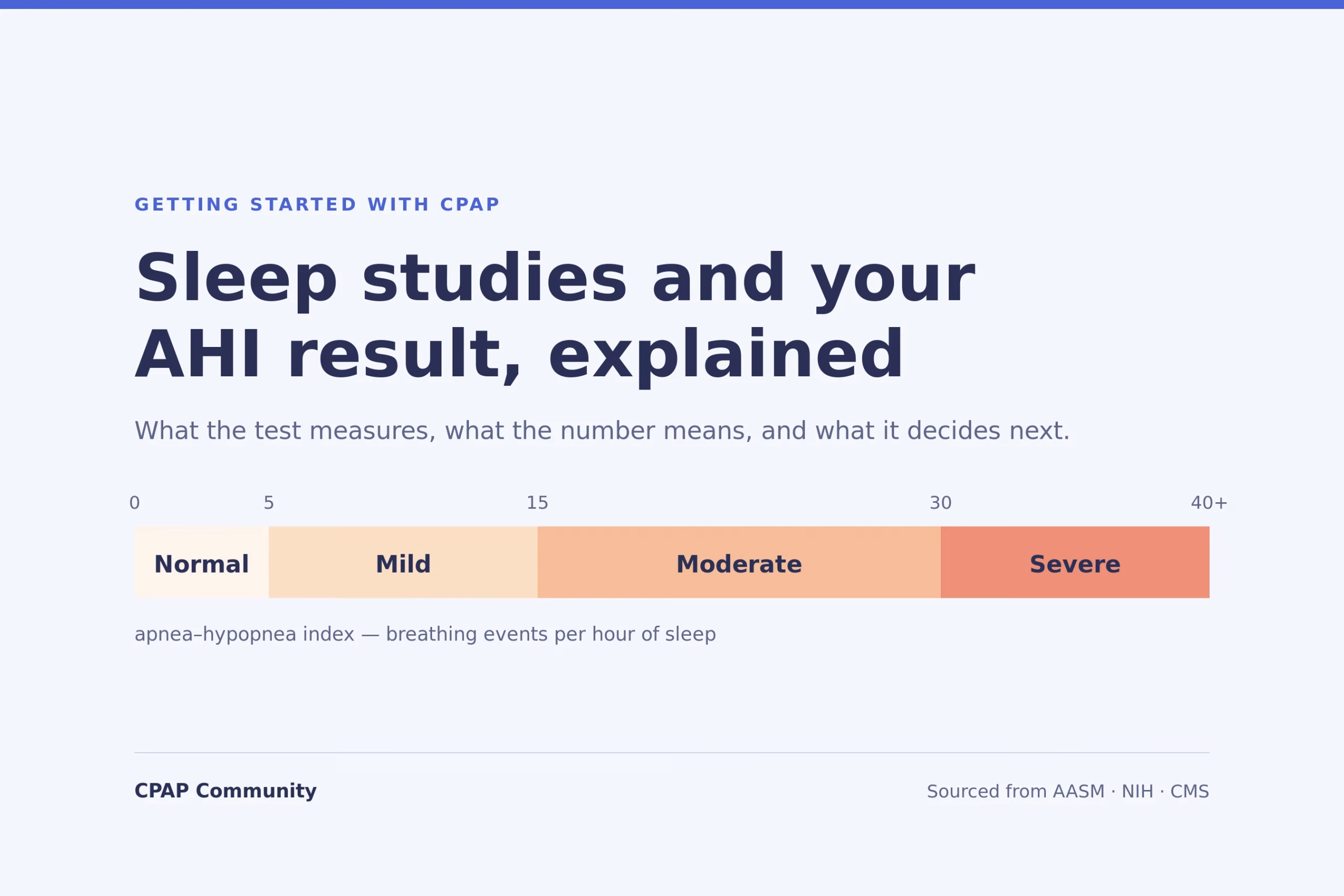
A sleep study records your breathing, blood oxygen and — in a lab — your brain activity overnight, then counts how often your breathing stops or shrinks. That count per hour is your apnea–hypopnea index (AHI): under 5 is normal, 5–15 is mild, above 15 up to 30 is moderate, and above 30 is severe (source: NIH – StatPearls). The number decides whether you are diagnosed, which device you are prescribed, and whether insurance pays for it.
Key takeaways
- A questionnaire cannot diagnose you. AASM strongly recommends “clinical tools, questionnaires or prediction algorithms not be used to diagnose OSA in adults, in the absence of PSG or HSAT” (source: AASM).
- Two kinds of test. An in-lab polysomnogram (PSG) or a home sleep apnea test (HSAT) are both valid options for uncomplicated adults at risk of moderate-to-severe sleep apnea (source: AASM).
- Some people must test in a lab. AASM strongly recommends PSG rather than a home test for significant cardiorespiratory disease, possible respiratory muscle weakness, hypoventilation, chronic opioid use, stroke history or severe insomnia (source: AASM).
- A negative home test is not an all-clear. “If a single HSAT is negative, inconclusive or technically inadequate, PSG be performed” — also a strong recommendation (source: AASM).
- The scoring rule changes the number. A hypopnea counts under the AASM recommended rule with a ≥3% oxygen drop or an arousal; an alternative rule requires ≥4% and ignores arousals entirely (source: AASM).
- Coverage follows the number. Medicare pays at an AHI of 15 or more, or 5–14 with documented symptoms — after an in-person evaluation that has to happen before the sleep test (source: CMS).
This guide is written by the CPAP Community editorial team. We are not clinicians, so every clinical statement below is linked to its primary source. Only your own sleep clinician can interpret your result; we can explain what the terms mean.
What a sleep study actually measures
An in-lab polysomnogram records several channels at once: an electroencephalogram (EEG) for brain activity, pulse oximetry for blood oxygen, nasal and oral airflow sensors, effort bands around the chest and abdomen, an electrocardiogram (ECG) and a chin electromyogram (EMG) (source: NIH – StatPearls). The EEG matters more than it sounds: it is the only channel that can tell whether you were genuinely asleep or lying still with your eyes shut.
A home sleep apnea test records a reduced set — usually airflow, breathing effort and oximetry, with no EEG. That is why it is cheaper and more comfortable, and also why the number it produces means something slightly different.
What counts as a breathing event
Two kinds of event are scored overnight, and the difference between them is one of degree.
- Apnea: airflow drops by 90% or more from the pre-event baseline, for at least 10 seconds (source: NIH – StatPearls).
- Hypopnea: airflow drops by at least 30% for at least 10 seconds, and brings at least a 3% oxygen desaturation or an arousal from sleep (source: AASM).

That second definition has an alternative version, and it is the most common reason two reports on the same person disagree. The AASM recommended rule scores a hypopnea on a ≥30% airflow reduction lasting ≥10 seconds with “≥3% oxygen desaturation from pre-event baseline and/or the event is associated with an arousal”. The acceptable rule requires “≥4% oxygen desaturation” and does not count arousals at all (source: AASM). The 4% rule is stricter, scores fewer events, and therefore produces a lower AHI from an identical night of sleep. If your number is not what you expected, it is worth asking which rule your lab scored to.
Reading your AHI
The apnea–hypopnea index is the total number of apneas and hypopneas divided by the hours you actually slept. Severity is graded straight off it: mild is 5–15 events an hour, moderate is above 15 up to 30, and severe is above 30 (source: NIH – StatPearls).

Severity is not the same thing as how bad you feel. Plenty of people with a moderate AHI feel wrecked, and some with a severe one insist they sleep fine. The index measures breathing events, not suffering — which is why symptoms are documented alongside it.
AHI, REI and RDI are not the same number
Three similar-looking indices turn up on sleep study reports, and confusing them causes a lot of unnecessary worry:
- AHI — apneas and hypopneas per hour of sleep. Needs EEG, so it comes from an in-lab study.
- REI — respiratory event index: events per hour of recording time, used by home tests because they cannot distinguish sleep from wakefulness (source: NIH – StatPearls). Time you spent awake in bed stays in the denominator and dilutes the average.
- RDI — respiratory disturbance index: apneas and hypopneas plus respiratory effort-related arousals, so it is usually the highest of the three.
The practical consequence is that a home test tends to read lower than a lab study of the same night. That is the mechanism behind the AASM rule that a negative, inconclusive or technically inadequate home test should be followed by a full polysomnogram (source: AASM).
Home test or sleep lab: which one you get
For an uncomplicated adult who probably has moderate-to-severe sleep apnea — excessive daytime sleepiness plus two of loud snoring, witnessed gasping or pauses, and hypertension — AASM strongly recommends either “PSG, or HSAT with a technically adequate device” (source: AASM). In that situation the choice is often practical: cost, waiting list, and whether you can sleep in a lab.
The guideline is firmer where it matters. It strongly recommends “PSG, rather than HSAT… in patients with significant cardiorespiratory disease, potential respiratory muscle weakness due to neuromuscular condition, awake hypoventilation or suspicion of sleep related hypoventilation, chronic opioid medication use, history of stroke or severe insomnia” (source: AASM). If any of those apply to you and a home test is offered, it is reasonable to ask why.
Two further recommendations are conditional rather than strong: a split-night protocol may be used instead of a full-night diagnostic study when clinically appropriate, and a second PSG may be considered when an initial study is negative but suspicion persists (source: AASM). A split-night study diagnoses in the first half of the night and titrates your pressure in the second, so you leave with both the diagnosis and the setting.
Where questionnaires do and do not fit
Screening tools are how many people arrive at a sleep study, not how they leave one. STOP-BANG asks eight yes/no questions — snoring, tiredness, observed apneas, blood pressure, BMI over 35, age 50 or more, neck circumference and male sex — with five or more “yes” answers marking high risk. The Epworth Sleepiness Scale runs 0–24, and a score above 9 suggests excessive daytime sleepiness worth investigating (source: NIH – StatPearls).
Both are useful for deciding whether to test. Neither is a diagnosis, and AASM says so in its strongest language (source: AASM).
What your result decides next
Three things follow from the number.
- Whether you are treated at all. AASM strongly recommends PAP over no therapy for adults with obstructive sleep apnea and excessive sleepiness (source: AASM).
- Which device. AASM strongly recommends starting therapy with either auto-adjusting PAP at home or an in-lab titration in adults without significant comorbidities, and using either CPAP or APAP for ongoing treatment (source: AASM). Our guide to types of CPAP machines covers what that choice means in practice.
- Whether it is covered. Medicare requires an AHI or RDI of 15 or more with a minimum of 30 events, or 5–14 with a minimum of 10 events plus documented symptoms such as daytime sleepiness, impaired cognition, mood disorders, insomnia, hypertension, ischaemic heart disease or a stroke history (source: CMS).
If a titration was done, your report also carries a prescribed pressure. Adult auto-adjusting devices typically work in the 5–15 cm H₂O range, and in-lab titration usually starts at 5 cm H₂O and steps up in 2 cm H₂O increments until events settle (source: NIH – StatPearls).
The deadline nobody mentions
One detail catches people out after the study rather than before it. Medicare requires a clinical re-evaluation “no sooner than the 31st day but no later than the 91st day after initiating therapy”, and continued coverage depends on documented adherence — “use of PAP ≥4 hours per night on 70% of nights during a consecutive thirty (30) day period anytime during the first three (3) months of initial usage” (source: CMS). Machines report this automatically. Roughly half of patients stop using PAP consistently after the first month (source: NIH – StatPearls), which is exactly the window that coverage is measured in.
If the first weeks are going badly, that is a reason to call your clinic early rather than wait for the review appointment. AASM strongly recommends education at the start of therapy and suggests behavioural, troubleshooting and telemonitoring-guided support during that initial period (source: AASM).
What to ask for when you get your results
- The full report, not just the number. It carries your AHI, oxygen nadir, sleep position breakdown and time in each sleep stage.
- Which hypopnea rule was scored — the 3% / arousal rule or the 4% rule.
- Whether the index is AHI or REI, and whether the test was at home or in a lab.
- Whether events clustered by position or sleep stage. Apnea that is much worse on your back or in REM changes what your clinician may suggest.
- The prescribed pressure or pressure range, if a titration was done.
Frequently asked questions about sleep studies and AHI
What is a normal AHI?
An apnea-hypopnea index under 5 events per hour is considered normal in adults. From 5 to 15 is mild obstructive sleep apnea, above 15 up to 30 is moderate, and above 30 is severe.
What is the difference between an apnea and a hypopnea?
An apnea is a drop in airflow of 90% or more from the pre-event baseline lasting at least 10 seconds. A hypopnea is a smaller drop, at least 30% for at least 10 seconds, and it only counts if it is accompanied by at least a 3% oxygen desaturation or an arousal from sleep.
Why is my AHI different from a previous sleep study?
The most common reason is the scoring rule. The AASM recommended rule counts a hypopnea with a 3% oxygen desaturation or an arousal, while an alternative rule requires a 4% desaturation and ignores arousals. The stricter rule scores fewer events and gives a lower AHI for the same night. Home tests also report REI rather than AHI, which is calculated over recording time rather than sleep time.
Is a home sleep apnea test as good as an in-lab study?
For an uncomplicated adult likely to have moderate to severe sleep apnea, AASM accepts either. But a home test must not be used for people with significant cardiorespiratory disease, possible respiratory muscle weakness, hypoventilation, chronic opioid use, a stroke history or severe insomnia, and if a single home test is negative, inconclusive or technically inadequate, a full polysomnogram should follow.
Can a questionnaire diagnose sleep apnea?
No. AASM gives a strong recommendation that clinical tools, questionnaires and prediction algorithms not be used to diagnose obstructive sleep apnea in adults without a polysomnogram or home sleep apnea test. Tools such as STOP-BANG and the Epworth Sleepiness Scale help decide whether to test, not what the result is.
What AHI do I need for insurance to cover CPAP?
Medicare generally requires an AHI or RDI of 15 or more with a minimum of 30 events, or between 5 and 14 with a minimum of 10 events plus documented symptoms such as excessive daytime sleepiness, impaired cognition, mood disorders, insomnia, hypertension, ischaemic heart disease or a stroke history. An in-person clinical evaluation must happen before the sleep test.
What is a split-night sleep study?
A split-night study diagnoses sleep apnea in the first part of the night and titrates your CPAP pressure in the second, so one visit produces both the diagnosis and the prescribed setting. AASM conditionally recommends a split-night protocol rather than a full-night diagnostic study when it is clinically appropriate.
Related guides
- What does CPAP stand for? Meaning and how it works
- Can I buy a CPAP machine without a prescription?
- Types of CPAP machines: CPAP vs APAP vs BiPAP compared
- What does a CPAP machine do? How the therapy works
- Types of CPAP masks: nasal, pillow and full-face options
- Is it bad to use CPAP all the time?
Sources
- American Academy of Sleep Medicine – Clinical Practice Guideline for Diagnostic Testing for Adult OSA — when PSG is required, negative-HSAT rule, split-night protocol
- American Academy of Sleep Medicine – Hypopnea scoring criteria — the recommended 3% rule and the acceptable 4% rule
- American Academy of Sleep Medicine – PAP therapy clinical practice guideline — device choice and support at the start of therapy
- NIH / NCBI StatPearls – Obstructive Sleep Apnea — event definitions, AHI and REI, PSG channels, screening tools
- NIH / NCBI StatPearls – Continuous Positive Airway Pressure — titration pressures and increments
- Centers for Medicare & Medicaid Services – LCD L33718 — coverage thresholds, re-evaluation window, adherence rule
- National Heart, Lung, and Blood Institute (NHLBI) – CPAP — what CPAP is prescribed to do
How we source this guide
This guide is researched and written by the CPAP Community editorial team. We are writers and researchers, not clinicians. Clinical statements are traced to primary sources — the National Heart, Lung, and Blood Institute, the U.S. Food and Drug Administration, the Centers for Medicare & Medicaid Services and the American Academy of Sleep Medicine — and cited in the text so you can check them. We sell no CPAP equipment and take no manufacturer sponsorship. Nothing here is medical advice; see our medical disclaimer and speak to your own sleep clinician before changing your therapy.
Last reviewed by the CPAP Community editorial team: August 2026.